

Our live updates in social networks
Be the first to know about new opportunities right next door or abroad. We tell you right away what is in store for you and how to go for it.

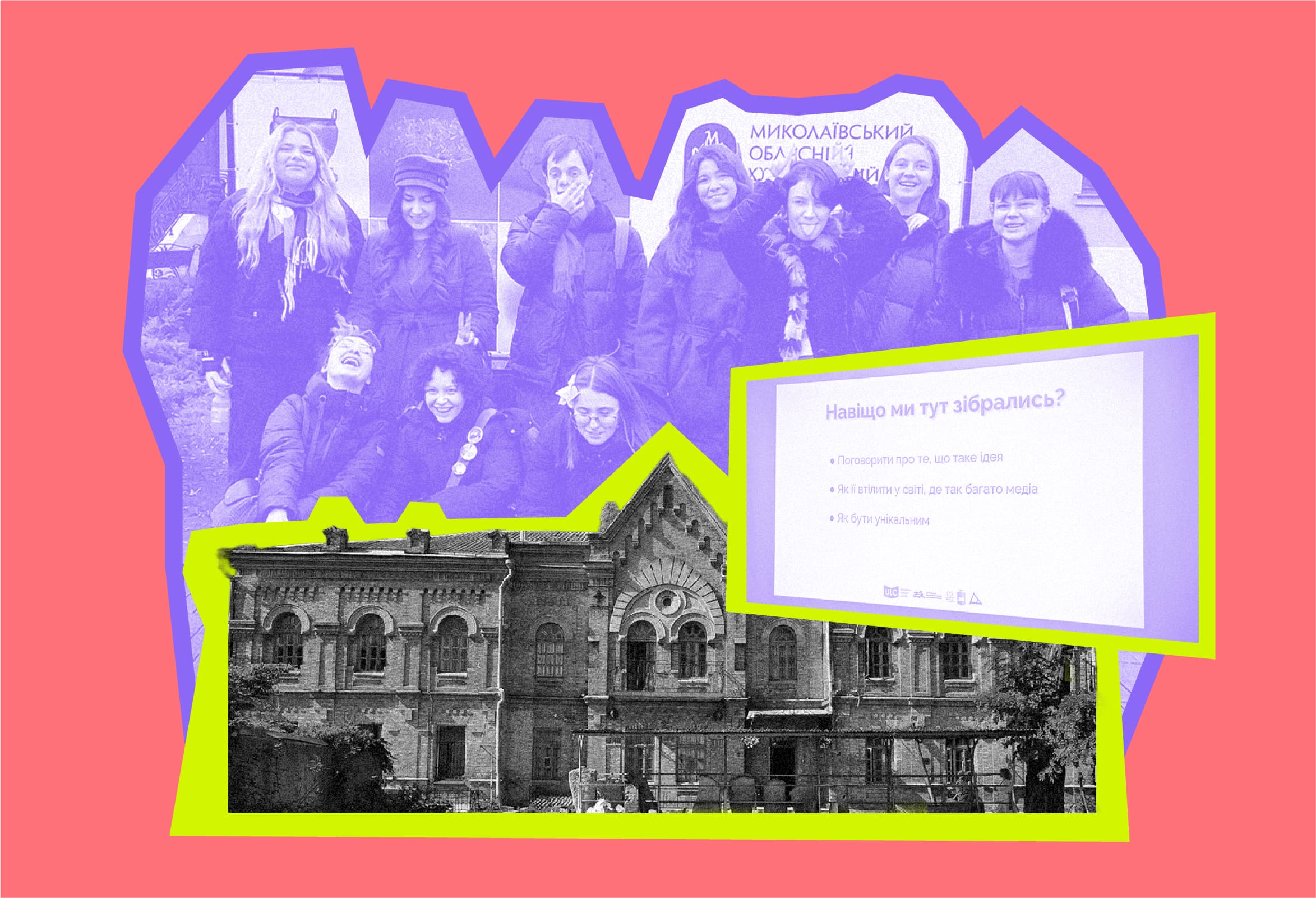
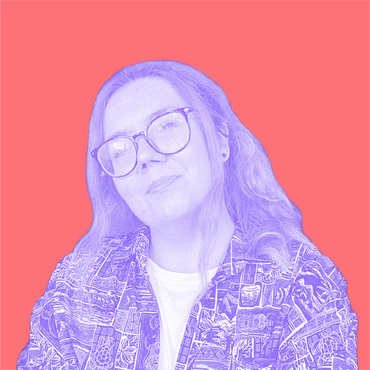
‘When I work with teenagers, I like their fresh perspective, their bravery, “Just watch me! I will come and do it!” They are like a puzzle you need to find the key to. Yes, teenagers can be vexatious. I am like that myself, and we find each other in this vexatiousness,’ says Nina Palamarchuk, a writer who runs ‘Altanka’ poetry circles for teenagers at a Children’s Extracurricular Education Centre in frontline Mykolaiv.
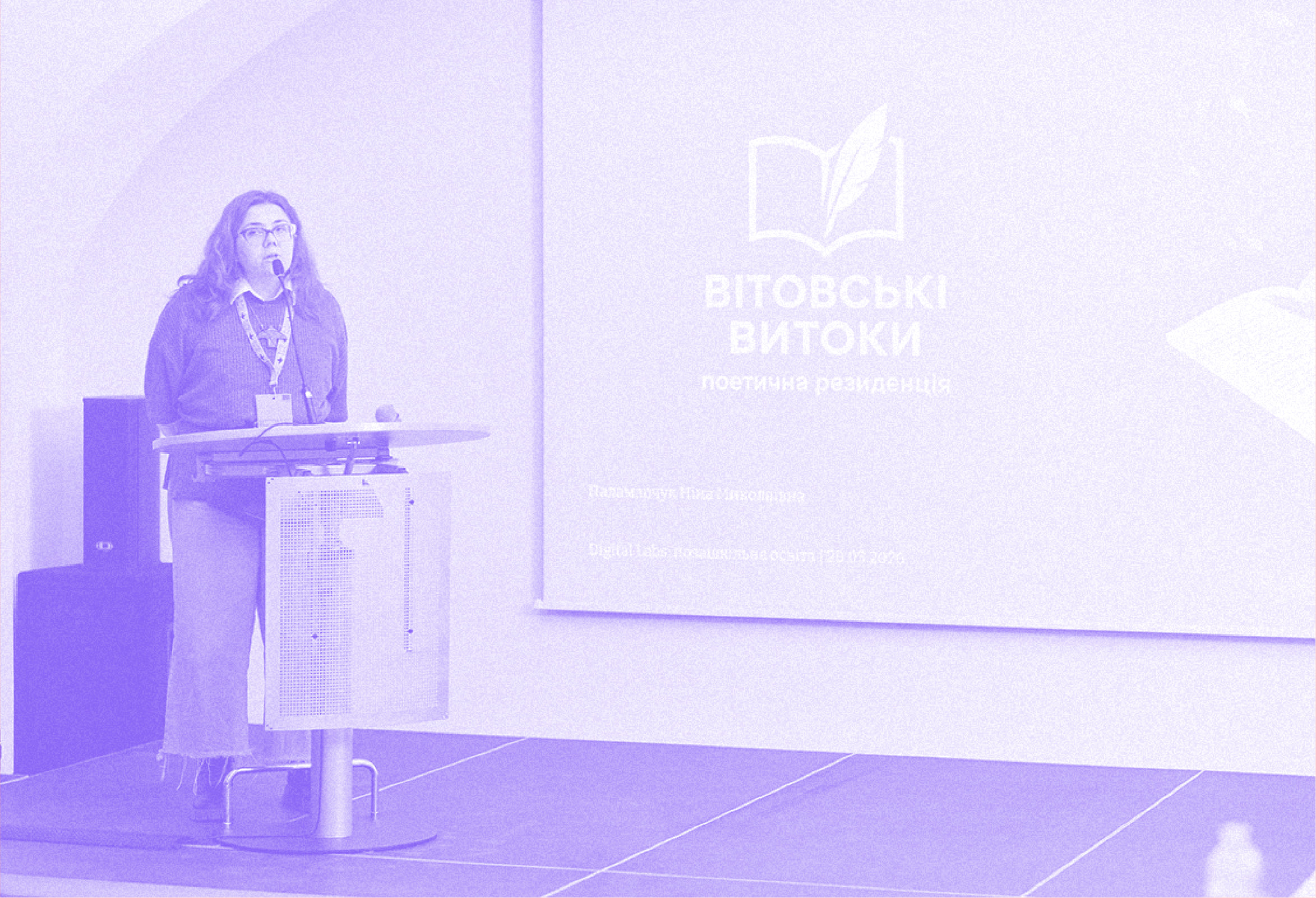
In January this year, she and Alina Danylova, an alumna of the poetry circle, independently organised a pilot ‘Vitovski origins’ residency for teenagers from all over Ukraine, an idea the writer had been nurturing for ten years. Later, Nina brought that experience to the Digital Labs for teachers of informal education organised by the House of Europe.
We talked with her about why it is important to work with young people in frontline regions, how her vision for the project changed after the start of the full-scale invasion, why it was important to hold the residency in Mykolaiv, and the difficulties of working during the war.
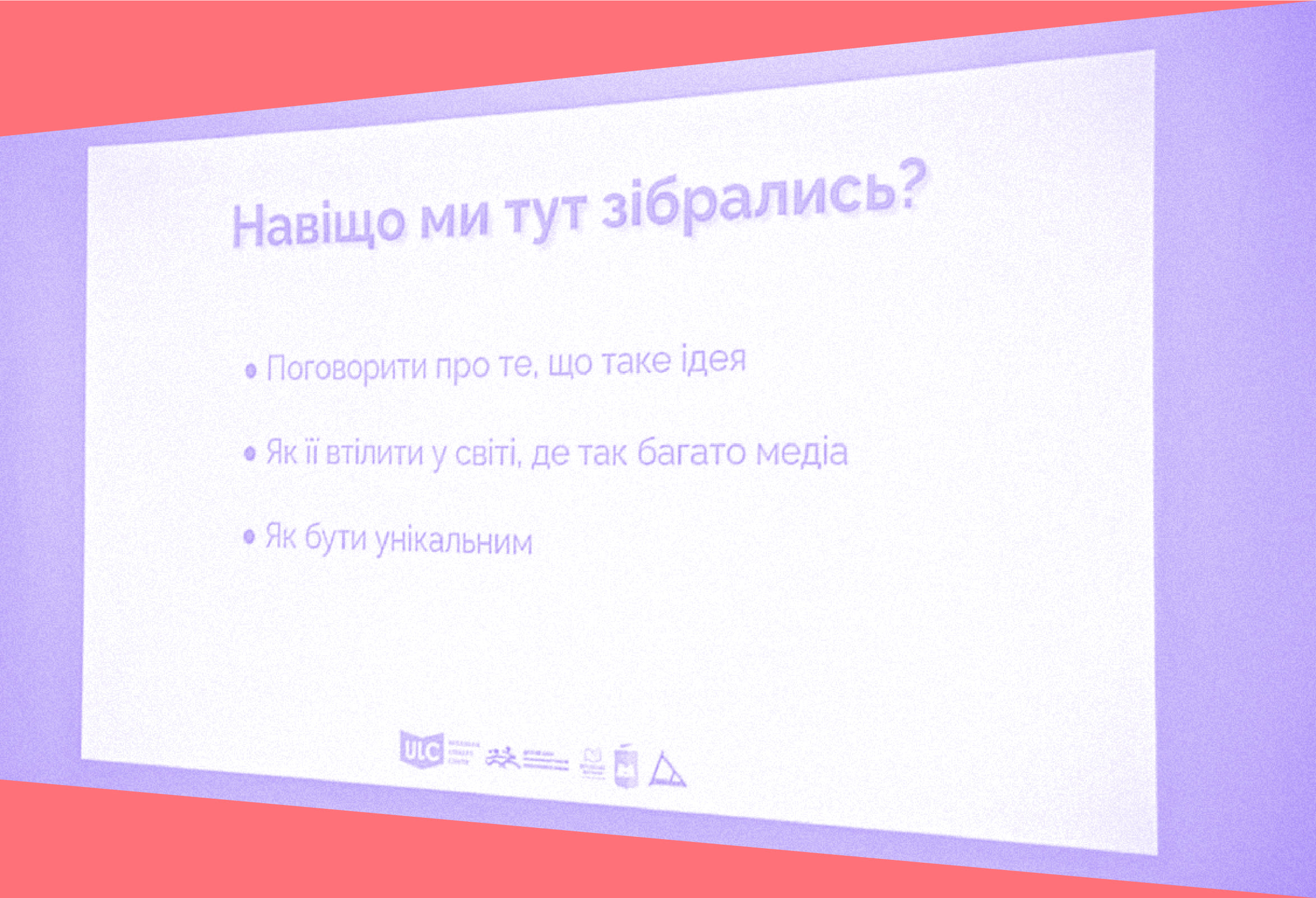
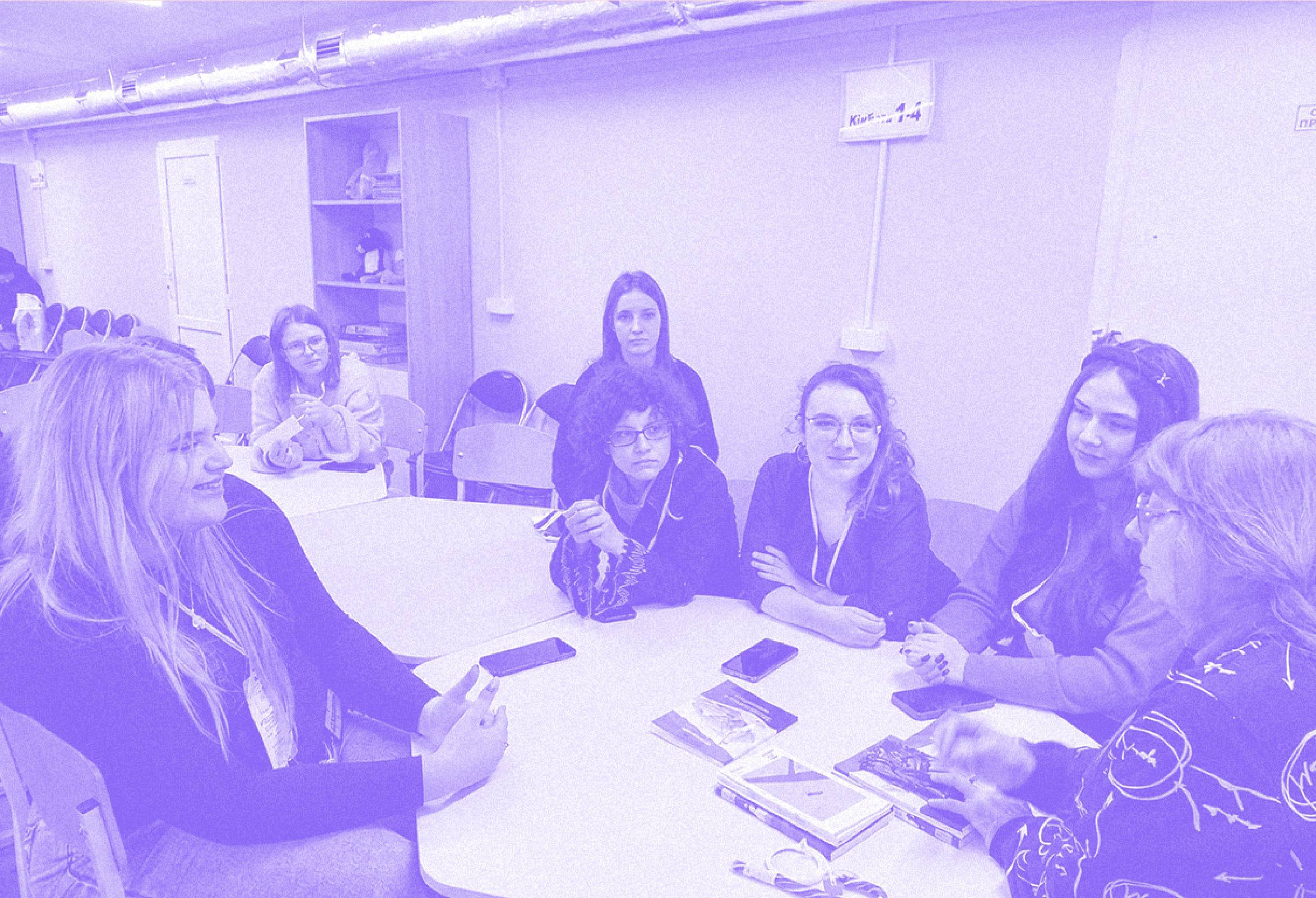
My team and I selected 16 participants for the pilot residency: 12 joined offline and 4 online, because not everyone could come for security reasons or due to a lack of funds. For three days, they took part in practical classes, lectures, meetings with poets and writers, and masterclasses, for example, on stage reading,
We took them on an excursion to the Mykolaiv Regional Museum of Local History, where the children poetically reinterpreted art objects on the spot. They were delighted. They sat down all over the museum — on the floor, on stools near the exhibits — and wrote their texts. The children literally made the South their own.
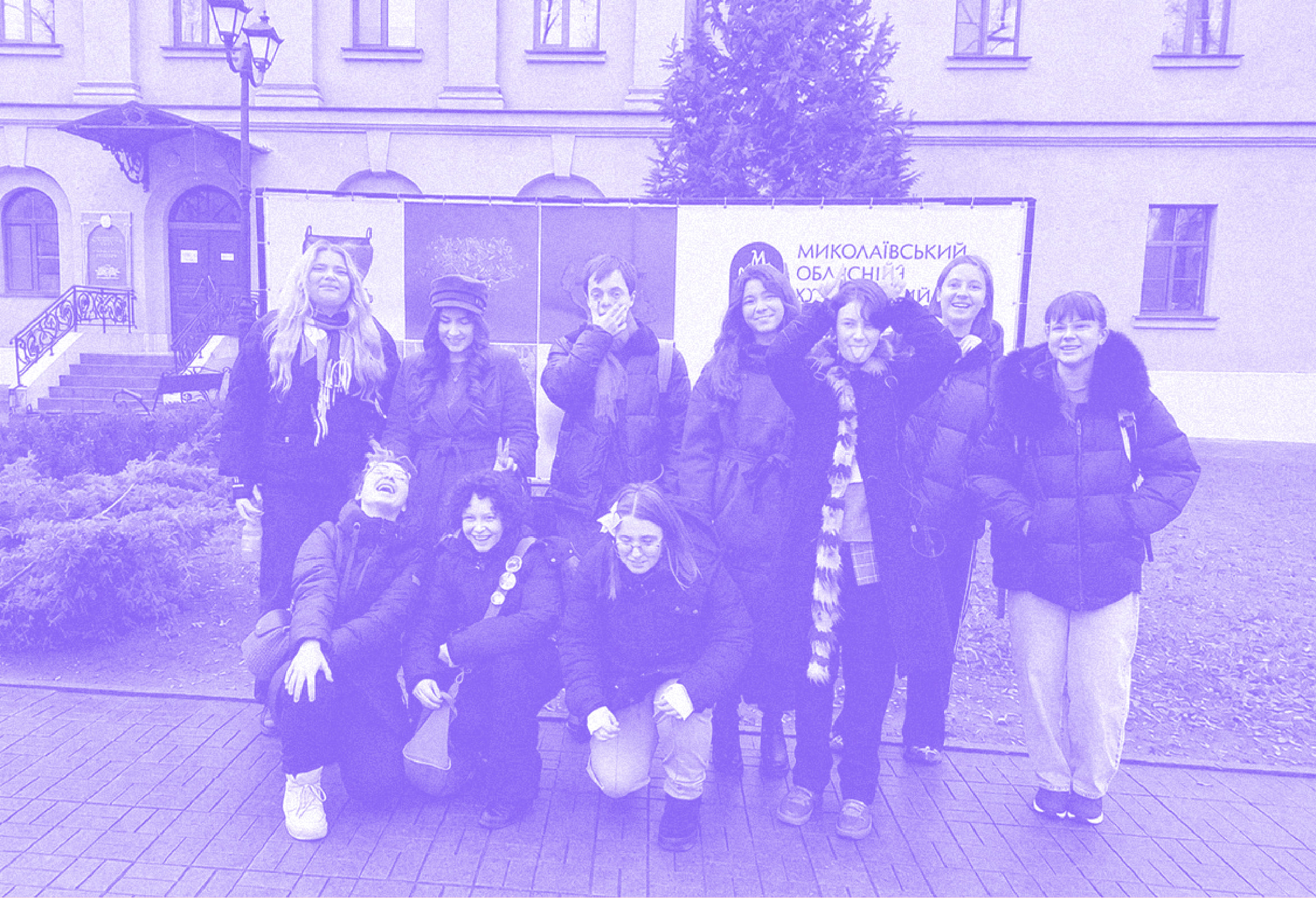
Each group had its own mentor. And this, in my opinion, is a great achievement of the laboratory itself, because the mentors were young graduates of my literary circle, poets and poetesses in their twenties.
So we had a triple transfer of experience: from the older generation to young poets just starting out, and from them to teenagers who see that they are not alone, that someone needs their poems. They see a mentor who has survived adolescence and is still writing, and this is inspiring.
But what moved me to tears was when, at the closing, one participant asked to speak and said she had found a home here. For me, this is the best and most important indicator of the project’s success.
As a result, we also managed to publish a collection of the participants’ poems at our own expense, and we sent two copies to each of them. We also wanted to hold presentations of the book in the participants’ cities, but by then we were short on funds.
So it was important that they were genuinely interested and eager to participate, rather than applying simplyfor a certificate. They will put the certificate on a shelf, but the memories will remain. They will return home and be able to say, ‘I saw this, I heard this.’
Why the south? Because we are Ukrainian-speaking too, and we have something to show the rest of Ukraine. We could have gathered on the border with Poland or Moldova, but it was important to me to bring the children here, because the south should also be on the Ukrainian map. Not just as a city of ships, but as a cultural city that nurtured an entire poetic school.
Not all the children who would like to come can do so. That is one thing. Moreover, there are constant air-raid alerts. Our institution has a shelter, but it could not pause its own classes, so we went down there with the other children. The residency almost fell apart on the first day because of this, because when a hundred children come in, they are not going to sit quietly. Therefore, we asked for a separate space in the shelter and immediately held classes there, so that we would not have to run back and forth or interrupt the educational process.
In addition, accommodating the participants was a challenge. It was a major problem, so we asked parents to take responsibility for their children’s safety when renting accommodation. Let us be honest: the shelter scene in Mykolaiv is far from perfect.
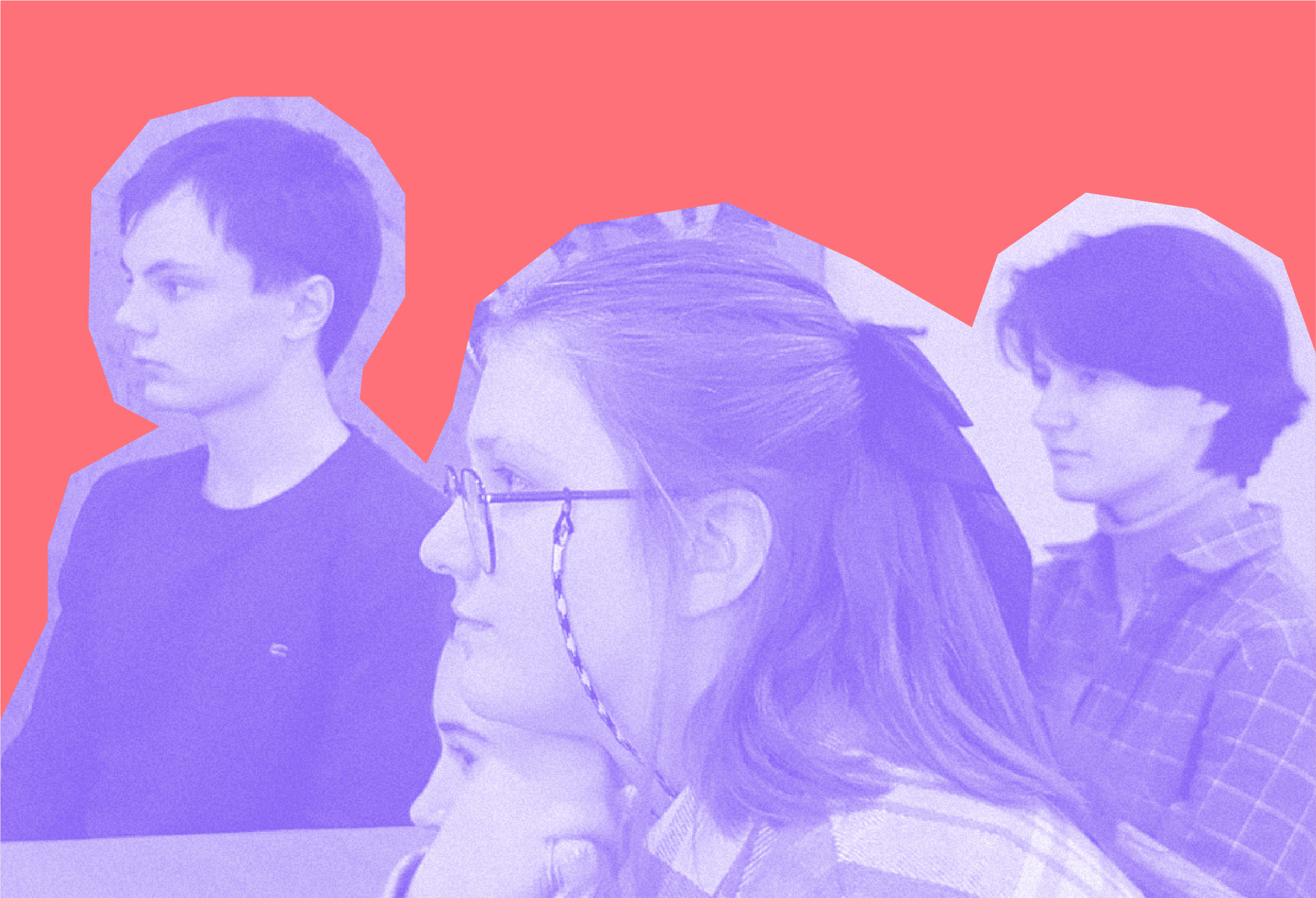
Have the children changed? Radically. This year, it was difficult to recruit a group again. Literary creativity looks like something academic, and it is difficult for children now. They have lived through COVID and the war, studied remotely, which often amounts to ‘not studying.’ They have difficulty with social interaction and communication.
When I suggested working in groups, the children took the task apart and scattered to different corners instead of interacting with each other. Many children were experiencing depressive states and headaches. So the difficulty was not that the teenagers themselves were difficult, but that they were not ready to learn and communicate.
And I want adults to hear them. When a child says, ‘I am in pain,’ they need to be heard. When a child says, ‘I am being insulted,’ they need to be heard.
If you hear the child, all the other connections will be built from there. The main thing is not to devalue what they are saying. Because a teenager is a person who is having a hard time, you know?
I do not think their perception of poetry has changed, because I already have an audience interested in it. They just develop more slowly; it takes them longer to reach their own conclusions.
It is harder for them to concentrate, for example, when doing the ‘slow reading’ exercise, where we ask questions about the text. Before the full-scale invasion, the children would tear the text apart like hungry wolves, asking questions: why is this line shorter than the other one? What do I feel here? What does it do to me as a reader? And then the discussion would begin. Now it is harder for children to ask questions, harder to enter into a discussion.
But this age is fertile ground for poetry. I encountered teenagers who had never written a line in their lives, but dared to because ‘I heard that the girls there were beautiful,’ and they grew up to become poets. One of them writes in a very interesting, defiant, and ironic way. There is little of that in literature, and this is very valuable. Now he is preparing to join the army.
Before the invasion, we travelled a lot around Ukraine with the children, slept in sleeping bags according to registration lists, four of us to one bed. And it was this first and second cohort that developed a sense of community. These are exactly the ones who still fit into my projects. ‘Ms. Nina wants a residency? Well, OK, let us do it.’
This is the most valuable thing; they keep in touch with contemporary Ukrainian literature, even if they no longer write themselves. But they have a context, their own prism through which they see things, their own voice and opinion, and the ability to argue. And this is crucial.
After the full-scale invasion, my vision of the project changed a lot. The priority was no longer simply to teach children something interesting; the priority was community and the transfer of communication between generations. At Digital Lab, this idea crystallised for me.
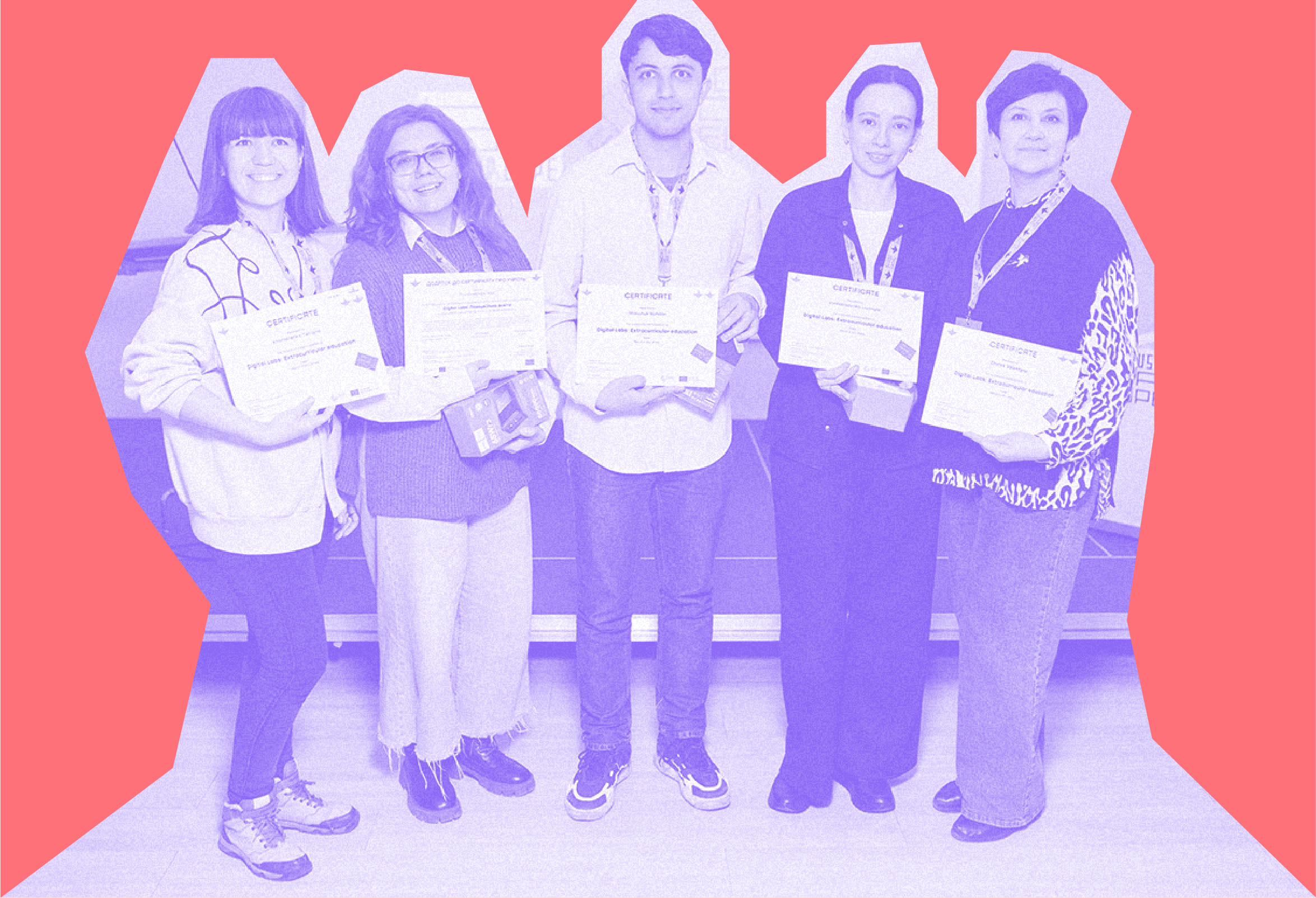
I applied to the programme because I really lacked relevant knowledge. On top of that, I was on the verge of professional burnout, and studying opened up new horizons for me. I saw that I was not alone, just like the student at the residency who talked about home. I also met many interesting people who cared deeply and were passionate about what they did.
The class with Yana Salakhova, head of the Theatre of Change NGO, resonated with me in particular. I began studying this topic in greater depth and adapting some practices from the Theatre of the Oppressed (a theatrical technique in which the audience becomes participants in a performance intended to help address social problems) to literary creativity.
At the masterclass, we chose two texts and read them in turn, improvising and guessing when to come in. And I tried to use something similar with the children. For example, when working with news, we choose several news items, read them in turn and see how they interact with one another. Or we write a text from the perspective of one of the participants in the news story. For example, two 40-year-old turtles were brought to Mykolaiv Zoo. Who is missing from the news story, and from whose perspective could it be described? The people who adopted these turtles? The turtles themselves? Or even the carrot that the turtle is chewing?
Among the international lecturers, I particularly remember Tomasz, a colleague from Poland. He talked about how event organisation. It really resonated with me because we went through something similar during our residency, when a colleague was shouting at me through the screen: ‘We need to feed the children, let usorder catering! If we let them go out for lunch, we will never get them back together.’ And she was right: without catering, the children would have been sitting hungry in the shelter during an air raid. Tomasz talked about loads of these kinds of practical details — right down to thinking in advance about where the adults would be able to smoke.
We also had a session with an Estonian art therapist. At the beginning, she honestly said that she was not in a position to teach us. And she was right: the things she suggested do not really help me anymore. The art therapy practices did not really work for us either. We already use these techniques ourselves, so we were hoping for something deeper. To be honest, singing is not going to help me. It is amusing and fun, but it will notreally do anything for me.
I approached my own psychotherapist with a similar request, because the shelling in Mykolaiv is so intense that it is incredibly difficult to relax. I am doing a lot of different things, but the anxiety remains very strong. So I think it must have been difficult for the art therapist to work with us, given the reality we live in.
We were thinking about applying for a new residency this year, but based on our colleagues' experience at Digital Lab, I realise it would be better to start with smaller applications. The residency costs almost a million. So perhaps we will try something smaller first — for example, apply for a grant to support my studio for adults (18+) in Mykolaiv and make it free for participants. Then, next year, we could submit a full residency application. By then, we may also be able to organise presentations of the poetry collections in the participants’ home cities, as we hoped to do this year.
Text: Kateryna Amelyna
Editing: Viktoriia Osipova
Translation into English: Iryna Goyal


It seems you are using Internet Explorer. Please consider browsing with Safari, Google Chrome or Mozilla Firefox for a better user experience with our website.